Buy bqd.eu ?
We are moving the project
bqd.eu .
Are you interested in purchasing the domain
bqd.eu ?
domain@kv-gmbh.de · 0541-91531010
Buy bqd.eu ?
How can reducing and non-reducing sugars be detected?
Reducing sugars can be detected using Benedict's test, in which the reducing sugar is heated with Benedict's reagent and a color change from blue to green, yellow, orange, or red indicates the presence of reducing sugars. Non-reducing sugars can be detected by first hydrolyzing them into reducing sugars using acid hydrolysis, and then performing the Benedict's test to detect the presence of reducing sugars. Another method to detect reducing and non-reducing sugars is through chromatography, where the sugars are separated based on their interactions with a stationary phase and a mobile phase, and then visualized using specific detection methods. **
Are halogens reducing agents?
No, halogens are not reducing agents. In chemical reactions, reducing agents are substances that donate electrons to other reactants, causing them to be reduced. Halogens, on the other hand, are highly electronegative elements that tend to gain electrons rather than lose them, making them more likely to act as oxidizing agents. **


Similar search terms for Reducing
Top-Angebote
Products related to Reducing:


-
When is sugar reducing?
Sugar is reducing when it undergoes a chemical reaction that breaks down its molecular structure, resulting in a decrease in its overall concentration. This reduction can occur when sugar is heated, such as when caramelizing sugar to make caramel, or when sugar is fermented by yeast to produce alcohol. Additionally, sugar can also be reduced through enzymatic reactions, where enzymes break down sugar molecules into simpler forms. **
-
What are reducing sugars?
Reducing sugars are a type of sugar that have the ability to reduce other substances, particularly by donating electrons. This is due to the presence of a free aldehyde or ketone group in their chemical structure. Common examples of reducing sugars include glucose, fructose, and maltose. When reducing sugars react with certain compounds, they can cause a color change, such as in the Benedict's test for detecting the presence of reducing sugars. **
-
What does reducing mean?
Reducing means to make something smaller, decrease in size, quantity, or intensity. It can also refer to simplifying or streamlining a process or system. In mathematics, reducing involves simplifying a fraction or expression to its simplest form. Overall, reducing involves minimizing or decreasing something to a more manageable or efficient state. **
-
Which exercises are effective for reducing belly fat at home?
Effective exercises for reducing belly fat at home include high-intensity interval training (HIIT) workouts, such as burpees, mountain climbers, and jumping jacks, which can help burn calories and target abdominal fat. Additionally, incorporating strength training exercises like planks, Russian twists, and bicycle crunches can help build muscle and increase metabolism, leading to a reduction in belly fat. It's also important to focus on overall cardiovascular exercise, such as running, cycling, or dancing, to help burn calories and promote fat loss throughout the body, including the belly area. **

What is non-reducing sugar?
Non-reducing sugars are carbohydrates that do not have a free aldehyde or ketone group, which is necessary for the reducing sugar reaction. This means they cannot reduce other substances, such as Fehling's solution or Benedict's solution. Non-reducing sugars include disaccharides like sucrose, which is made up of glucose and fructose molecules bonded together in a way that does not allow them to open up and form a free aldehyde or ketone group. **
Is sucrose a reducing sugar?
Sucrose is not a reducing sugar because it does not have a free aldehyde or ketone group that can participate in the reduction reaction. Sucrose is a disaccharide composed of glucose and fructose linked together by a glycosidic bond, which prevents it from being able to undergo the typical reactions of reducing sugars. **
Top-Angebote
Products related to Reducing:
-
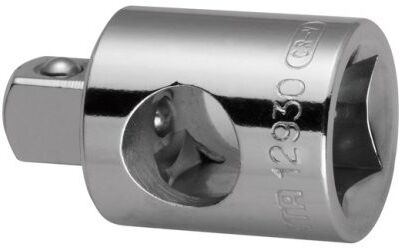
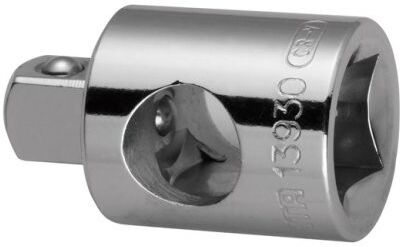
KS TOOLS 911.1233-E Reducing Adapter, ratchetDrive side (profile): Rectangle; Square Drive Tang Size [mm (inch)]: 12.5 (1/2); Output end (profile): Rectangle; Square drive tang dimensions [mm (in)]: 10 (3/8); DIN/ISO: DIN 3120, ISO 1174, DIN 3123, ISO 3316; Surface: Satined Matt, Chromed; Material: Chrome Vanadium Steel; Total Length [mm]: 46,0; Weight [g]: 50; Supplementary Article / Supplementary Info: with holder6,99 £*Shipping: 8,45 £Secure redirect to the provider
-
How can reducing and non-reducing sugars be detected?
Reducing sugars can be detected using Benedict's test, in which the reducing sugar is heated with Benedict's reagent and a color change from blue to green, yellow, orange, or red indicates the presence of reducing sugars. Non-reducing sugars can be detected by first hydrolyzing them into reducing sugars using acid hydrolysis, and then performing the Benedict's test to detect the presence of reducing sugars. Another method to detect reducing and non-reducing sugars is through chromatography, where the sugars are separated based on their interactions with a stationary phase and a mobile phase, and then visualized using specific detection methods. **
-
Are halogens reducing agents?
No, halogens are not reducing agents. In chemical reactions, reducing agents are substances that donate electrons to other reactants, causing them to be reduced. Halogens, on the other hand, are highly electronegative elements that tend to gain electrons rather than lose them, making them more likely to act as oxidizing agents. **
-
When is sugar reducing?
Sugar is reducing when it undergoes a chemical reaction that breaks down its molecular structure, resulting in a decrease in its overall concentration. This reduction can occur when sugar is heated, such as when caramelizing sugar to make caramel, or when sugar is fermented by yeast to produce alcohol. Additionally, sugar can also be reduced through enzymatic reactions, where enzymes break down sugar molecules into simpler forms. **
-
What are reducing sugars?
Reducing sugars are a type of sugar that have the ability to reduce other substances, particularly by donating electrons. This is due to the presence of a free aldehyde or ketone group in their chemical structure. Common examples of reducing sugars include glucose, fructose, and maltose. When reducing sugars react with certain compounds, they can cause a color change, such as in the Benedict's test for detecting the presence of reducing sugars. **
Similar search terms for Reducing
-
What does reducing mean?
Reducing means to make something smaller, decrease in size, quantity, or intensity. It can also refer to simplifying or streamlining a process or system. In mathematics, reducing involves simplifying a fraction or expression to its simplest form. Overall, reducing involves minimizing or decreasing something to a more manageable or efficient state. **
-
Which exercises are effective for reducing belly fat at home?
Effective exercises for reducing belly fat at home include high-intensity interval training (HIIT) workouts, such as burpees, mountain climbers, and jumping jacks, which can help burn calories and target abdominal fat. Additionally, incorporating strength training exercises like planks, Russian twists, and bicycle crunches can help build muscle and increase metabolism, leading to a reduction in belly fat. It's also important to focus on overall cardiovascular exercise, such as running, cycling, or dancing, to help burn calories and promote fat loss throughout the body, including the belly area. **
-
What is non-reducing sugar?
Non-reducing sugars are carbohydrates that do not have a free aldehyde or ketone group, which is necessary for the reducing sugar reaction. This means they cannot reduce other substances, such as Fehling's solution or Benedict's solution. Non-reducing sugars include disaccharides like sucrose, which is made up of glucose and fructose molecules bonded together in a way that does not allow them to open up and form a free aldehyde or ketone group. **
-
Is sucrose a reducing sugar?
Sucrose is not a reducing sugar because it does not have a free aldehyde or ketone group that can participate in the reduction reaction. Sucrose is a disaccharide composed of glucose and fructose linked together by a glycosidic bond, which prevents it from being able to undergo the typical reactions of reducing sugars. **
* All prices are inclusive of VAT and, if applicable, plus shipping costs. The offer information is based on the details provided by the respective shop and is updated through automated processes. Real-time updates do not occur, so deviations can occur in individual cases. ** Note: Parts of this content were created by AI.